
A long list of “things to do” or a meeting scheduled for next Monday, we are all on the same track. When things get overwhelming, it is easy to hand a tablet or phone to your child and let them play until the burden is somewhere lost. However, this reliance on screens to fill gaps in the parenting moments can eventually turn into something far more alarming.
As parents, you must have been experiencing a pinch of guilt watching your little one stuck to the screen. You wonder if they are missing the fun of unstructured play, bonding moments that build memories for a lifetime, or mastery of cognitive skills through problem-solving and interaction. This is when board games come to help.
What are Different Board Games?
Board games are broadly categorized by how they play and what the experience demands from you, ranging from casual party games to deep, strategic tabletop experiences. Here are some of the most popular genres:
- Strategy and Eurogames: These heavily focus on resource management, planning, and engine-building rather than luck or conflict. You build and develop your own civilization or territory.
- Abstract Strategy: These are pure strategy games with little to no luck or theme. They usually feature perfect information (all pieces are visible) and complex tactical choices.
- Thematic or Roleplaying: Immersive games driven by storytelling, miniatures, combat, and dice rolling. You often take on a specific character’s persona.
- Party and Social Deduction: Fast-paced, usually designed for larger groups, and rely heavily on communication, bluffing, and reading other players.
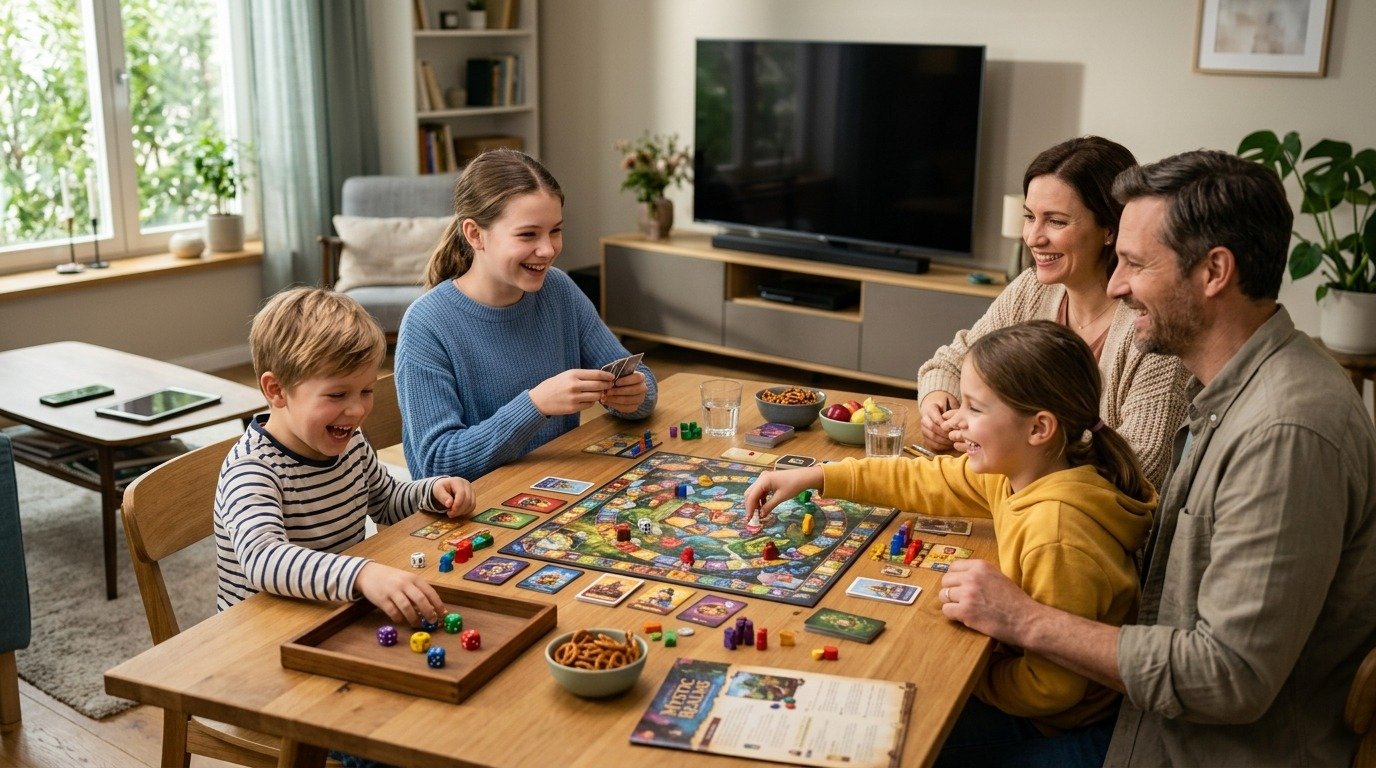
Board games can serve as the ultimate antidote to excessive screen usage and are a powerful tool for bringing families closer together. They can help address key challenges of the digital age.
Board Games: Benefits to Your Children
Here is how board games can address key challenges of the digital age:
- Cognitive Function and Critical Thinking Skills
Playing board games is not only about having fun but also about challenging the brain. Unlike passive screen activities, board games actively stimulate problem-solving skills and help develop cognitive functions. This mental stimulation makes these games an excellent remedy against mindless scrolling, making family time fun and mentally stimulating.
Chess or shoots and ladders are classic board games that are the epitome of forward planning, patience, and adaptability.
- Reduce the Risk of Digital Addiction
Digital addiction has become common among children. In a world dominated by screens, board games offer a refreshing break to us. They provide a tangible, hands-on experience that is a stark contrast to the endless digital distractions.
Board games pop the digital bubble and bring the children back into the real world. Unlike passive screen-based activities, board games will engage their hands, stimulate various senses, and be fun while creating moments of laughter, competition, and cooperation among children.
- Strengthen Grandparent-Grandchild Bonds
In this digital era, we are lost to those who are at a distance, but we are also far from the ones who are sitting right next to us.
Together, grandparents and grandchildren can play board games and develop a sense of belonging that the digital era has somehow stolen from our daily routine. A game of teams can help build effective communication among the family members. It will o be limited to only video calls but actual love.
- Reduce Risk of Dementia and Alzheimer’s
Playing board games not only strengthens the bond between family members but also has a special impact on cognitive health.
Engaging activities such as playing board games, help maintain the cognitive function that is so much needed for elderly members of the family. You need games that help stimulate critical thinking and problem-solving. Chess or card games can be the best option.
- Stress Relief Through Game Playing
Board games are a great mode of entertainment that can be unwound during those busy times, whether it is the fast and quick decision made in a Monopoly game or the strategic planning in educational games, the simple act of playing allows us to have a momentary escape from life’s pressure.
Instead of relating our lives to the perfect showcases we see on social media, these games are the ones that give us the opportunity to focus on shared moments of joy, fun, and connection.
Board games that have an educational theme, such as Guess the Fence, take it one step further by combining fun with learning. Now all you need to do is look for fun board games for kids. Not just your kids, but you also need this, believe it or not. Doomscrolling is an issue among adults as well, so let us deal with this together.